
The 'Reset Day' Philosophy: How to Recover from a Missed Habit Without Quitting

29 Dec 25, 06:00
1. Introduction: The Post-Failure Spiral
I don’t like to miss a habit and I’m pretty sure you don’t either.
You know the feeling.
It’s the morning after you missed a habit.
Yesterday, you were supposed to exercise, journal, meditate, or track your habits and you didn't.
As I'm writing this blog post, I was supposed to be at the park doing my daily walk. But instead, I'm sitting indoors watching heavy rain pour down. The sky is thick with dark clouds, and at some point I told myself, “Maybe I should just skip today and write this HabitPath post instead.”
Honestly? The feeling isn’t great.
Because even when the reason feels valid, a missed habit still feels like a small internal failure.
Then you open your habit tracker and see it:
- A broken streak
- A glaring empty box
- A big fat 0
Immediately, the guilt arrives. Heavy. Sticky. Unhelpful.
A voice in your head whispers (or shouts):
“Well… I already ruined it.”
“What’s the point now?”
“Might as well stop.”
That moment - the morning after is where most habits actually die.
Not on the day you miss, but on the day after, when shame takes over and convinces you that quitting is easier than continuing.
The Problem
Psychologists call this the What-The-Hell Effect.
It’s a real phenomenon where a small lapse triggers total abandonment. One skipped workout becomes a skipped week. One missed journal entry turns into, “I’m just not disciplined enough.”
The damage isn’t caused by the missed habit itself.
The real failure is letting that single miss define who you are.
The Thesis
Here’s the good news.
You don’t need more motivation.
You don’t need stronger willpower.
And you definitely don’t need to “start over.”
What you need is a Reset Day Protocol.
A Reset Day isn’t a day off - it’s a structured, intentional way to stop the bleeding, neutralize guilt, and restart momentum without quitting.
2. Why Our Brains Panic When We Miss a Day
The All-or-Nothing Trap
Most habit systems are built around streaks:
- 7 days in a row
- 30 days in a row
- “Don’t break the chain”
Streaks feel motivating until they break.
Your brain doesn’t see:
“I completed this habit 26 out of 27 days.”
It sees:
“Streak broken. Failure.”
This is classic all-or-nothing thinking. Streak-only trackers quietly train your brain to think in extremes.
Identity vs. Numbers
A missed day isn’t processed as neutral data.
Instead of:
“I missed a habit.”
Your brain jumps to:
“I’m inconsistent.”
“I lack discipline.”
“I can’t stick to anything.”
That's why missing one day feels so heavy—it’s not about the habit. It’s about identity.
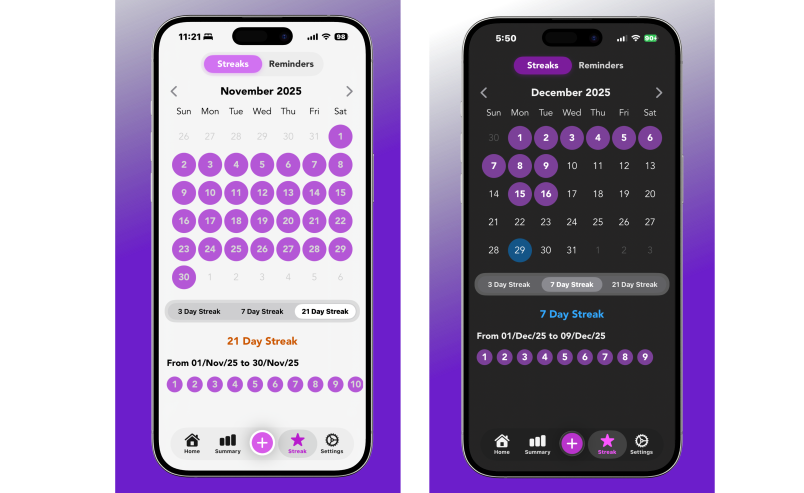
Because streaks are brittle by design, it helps to have a flexible recovery approach.
You can read more about why streaks can be toxic in our post Why Habit Tracker Streaks Are Toxic.
3. Defining the “Reset Day” Philosophy
Recalibration, Not Restarting
A Reset Day is not starting over.
Think of it like GPS navigation. When you miss a turn, the GPS doesn’t say:
“Trip failed. Go home.”
It recalculates and reroutes you.
You’re not back at Day 1.
You’re still heading toward the same destination.
The “Never Miss Twice” Rule
High performers don’t aim for perfection.
They aim for fast recovery.
- Missing once is allowed
- Missing twice is not
This removes panic after a slip and turns the next day into a clear, non-negotiable action point.
Identity-Based Recovery
Instead of saying:
“I failed my habit.”
You say:
“I’m someone who tracks habits—even on bad days.”
This keeps your identity intact. And identity is what sustains habits long-term.
4. The 3-Step Reset Day Protocol
Step 1: The Audit (Without the Shame)
No self-attack. No guilt spiral.
Ask neutral questions:
- Was the goal too big?
- Was the timing unrealistic?
- Did I forget?
- Was I exhausted or overloaded?
This is debugging, not judging.
If the miss happened because you simply forgot, the solution isn’t more discipline; instead, it’s smarter reminders.
You can learn how to set up effective custom habit reminders for ADHD to help prevent future misses.
Step 2: The Minimum Viable Action (MVA)
On a Reset Day, you don’t do the full habit.
You do the smallest version that preserves identity.
Examples:
- Don’t run 5 miles → put on shoes and walk 2 minutes
- Don’t write 1,000 words → write one sentence
- Don’t meditate 20 minutes → take 3 slow breaths
The goal isn’t performance.
It’s showing up.
Step 3: Log It as a “Win”
This is non-negotiable.
Logging the MVA:
- Rewrites the story from “I failed” to “I recovered”
- Reduces shame
- Makes tomorrow easier
Your brain values continuity more than intensity.
5. Leveraging HabitPath Features for Your Reset
How the + System Saves Your Momentum
Most trackers force a binary choice: success or failure.
HabitPath doesn’t.
With our + System, you can log partial effort honestly.
Example:
- Normal workout: +10
- Reset Day effort: +1
You’re not cheating.
You’re preserving momentum without pretending perfection.
The Power of the Weekly View
Daily views exaggerate failure.
Weekly views show reality.
Over 7 days:
- One miss becomes statistically insignificant
- Progress feels visible
- Motivation stabilizes
Strategic Recovery Reminders
Set a reminder that says:
“If you missed yesterday, today is your Reset Day.”
This normalizes recovery and removes emotional drama.
6. Advanced Tactic: The “Planned” Reset Day
Prevention Is Better Than Cure
Schedule Reset Days in advance:
- First Sunday of every month
- After travel
- After major deadlines
Planned Reset Days let you:
- Clean up abandoned habits
- Reduce unrealistic goals
- Recommit intentionally
In fact, you can see how regular habit tracking and planning your Reset Days can help you achieve your goals faster by using the right habit tracker app.
Regular resets keep habits aligned with real life—not ideal life.
7. Conclusion: Consistency Is a Choice, Not a Chain
Consistency isn’t about never failing.
It’s about how fast you get back up.
- Missing once is normal
- Panic is optional
- Recovery is a skill
- Reset Days keep you in the game
Final Reminder
Don’t quit because of one bad day.
Treat today as your Reset Day.
Track your comeback—not just your perfections.