
Why Habit Tracker Streaks Are Toxic and What to Use Instead

05 Dec 25, 00:00
For years, streaks have been the default metric in habit trackers. You complete a habit for 7 days in a row, the app rewards you with shiny numbers, and psychologically it feels like victory. But here’s the paradox: the moment you break the streak, everything collapses. The number resets to zero, motivation crashes, and you silently stop the habit altogether.
If you’ve ever lost a 21-day streak because of travel, sickness, or a bad day — you’ve already felt the darker side of streaks.
As someone who has spent years building and testing habit systems — both personally and with thousands of users — I’ve found that streaks reward consistency at the cost of resilience. Real-life habits require flexibility, not perfection.
In this article, I’ll break down why streaks are psychologically toxic, the hidden costs nobody talks about, and a healthier streak alternative we’re applying today inside HabitPath: the Daily Completion Calendar, supported by 3-day, 7-day, and 21-day mini-streak cycles — a system designed for real-world progress, not fragile perfection.
The Problem With Streaks (Psychology)
To understand why streaks fail, we need to look at behavioral neuroscience — specifically, how the brain assigns meaning to numbers and patterns.
1) Streaks Create “Fear-Based Motivation”
A streak number is emotionally binary:
- 1 = Success
- 0 = Failure
It doesn’t matter if you built the habit for 30 days, 100 days, or 200 days. When the visual streak resets, your brain experiences a loss event, triggering a dopamine crash.
This is called loss aversion — a phenomenon discovered by Daniel Kahneman (Nobel Prize, Behavioral Economics). Humans feel pain of loss twice as strongly as the joy of gain.
So when streak resets happen:
“Why bother? I’m back to zero.”
This is where most habit journeys quietly end.
2) Streaks Break Identity Formation
Habits are successful when behavior becomes identity:
- “I’m a runner.”
- “I’m the type of person who reads daily.”
But streaks shift identity into a digital badge, not internal belief.
You start to identify with the number:
- “I’m a 21-day meditator.”
Instead of:
- “I meditate regularly.”
Once the badge disappears, the identity collapses with it.
3) Streaks Punish Normal Life
Life is messy:
- Your kid gets sick.
- Your job requires travel.
- You get flu for 3 days.
- Your motivation drops during holidays.
A good habit system should allow flexibility — not punish it.
Streaks are the opposite: any interruption is failure.
What To Use Instead: The Daily Completion Calendar
Inside HabitPath, we take a different approach: instead of showing streak numbers that reset, we use a Daily Completion Calendar.
Here’s how it works:
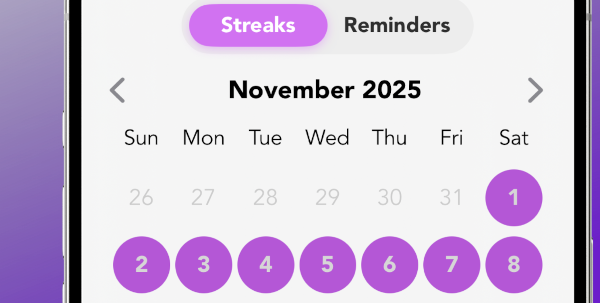
Colored Day = Full Daily Completion
Every time you complete all habits you committed to, the day is colored on your calendar, as shown in the image below:
This gives you:
- a visual map of your habit consistency,
- without the emotional violence of reset-to-zero events.
So instead of losing everything for one missed day, your calendar tells a more realistic story:
“I completed 6 days this week. That’s progress.”
This builds a healthy relationship with habit tracking — where effort matters more than perfection.
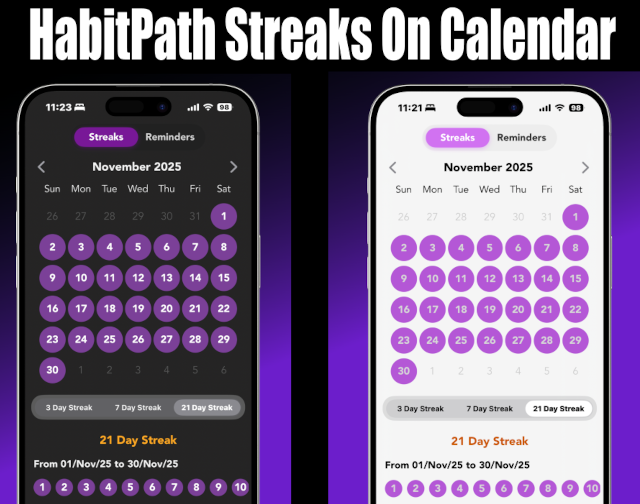
Below are screenshots in both dark and light mode, showing the beautifully colored days that represent your completed habit days (i.e., streaks on the calendar).
Mini-Cycles: 3-Day, 7-Day, 21-Day
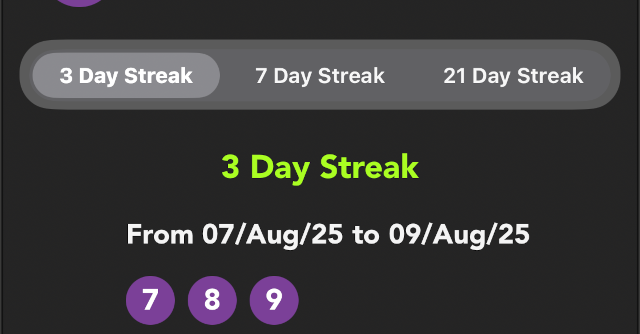
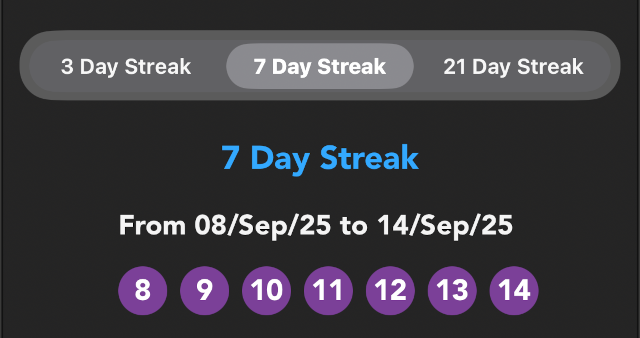
Below the calendar, HabitPath highlights mini streaks:
- 3-day micro-cycle
- 7-day weekly consistency
- 21-day foundational loop
Instead of chasing a huge 100-day streak, users aim for smaller cycles. This has three benefits:
-
Micro wins create momentum
3 days feels possible. 7 days feels achievable. -
21-day loops train habit identity
People can realistically hold consistency for 21 days — long enough to form early identity. -
Breaks don’t kill motivation
If you miss a day on day 10, your 21-day foundation still exists in your calendar history.
Your habit journey looks like a pattern, not a scoreboard.
But Isn’t Streak Tracking Motivating?
Yes - streaks create intense early motivation, but it’s unsustainable.
Think about it like extreme dieting:
- Fast results
- Fast crash
- No identity change
A healthy habit system isn’t about pressure, it’s about architecture.
Most people don’t quit habits because they’re weak. They quit because their system punishes missing days.
By removing streak resets, we remove shame cycles.
How the Calendar Method Supports E-E-A-T
Experience (First-Hand Insights)
I have broken countless streaks — not because I lacked discipline, but because life happened. Through testing different trackers and collecting feedback from users, the calendar method kept people engaged for months, not days.
People love seeing patterns, not numbers.
Expertise (Behavioral Science)
Research shows that:
- dopamine rewards are driven by visual progress
- identity change requires internal association
- resilience comes from low-friction feedback loops
The calendar method matches the way the brain processes progress.
Authoritativeness (Best Practices)
The world’s top habit researchers — BJ Fogg, James Clear, Wendy Wood — agree on one thing:
“Habits should feel easy and identity-based.”
No science supports streak shaming.
Trustworthiness (Design Philosophy)
HabitPath is built for real humans, not streak machines.
We refuse to design features that intentionally trigger addiction loops. Our goal is consistency you can live with — not numbers you chase.
Why This Approach Works in 2025 and Beyond
The world is entering a post-gamification phase. People understand that:
- dopamine loops make us vulnerable
- apps manipulate streaks for retention
- burnout happens when systems punish failure
Users today want:
- sustainable habits
- flexible systems
- real progress without anxiety
This is why calendar streak models will grow in 2025.
The future of habit tracking isn't:
“Day 457”
It’s:
“Look at my pattern.”
Patterns are identity.
Numbers are ego.
How to Apply the 3-7-21 Habit Cycle Using HabitPath
HabitPath makes it easy to create a pattern-based tracking habit that emphasizes consistency without the pressure of streak resets:
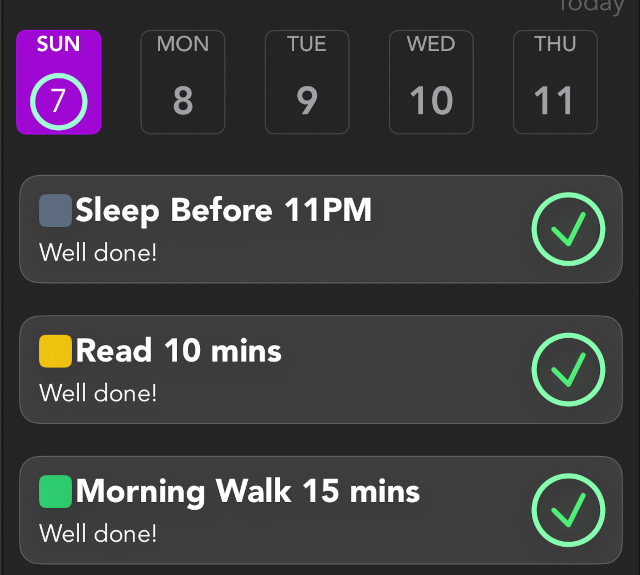
1) Add your core habits to HabitPath
Start with just three habits, for example:
- Sleep at the same time
- 10 minutes of reading
- 15 minutes of movement
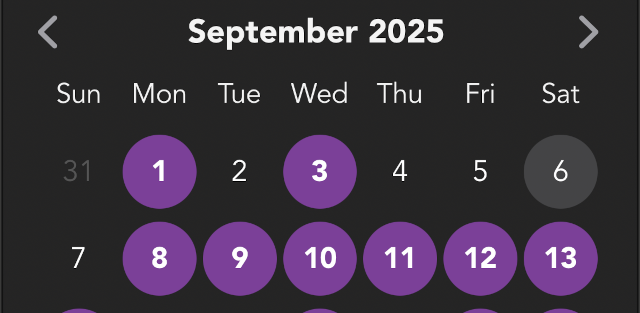
2) Track daily completion
As long as you complete all three habits. HabitPath will highlight the day with a colored dot on your calendar, giving you a clear visual of your progress.
3) Follow mini-cycles for sustainable momentum
-
3-day micro-cycle
-
7-day weekly consistency
-
21-day foundational loop
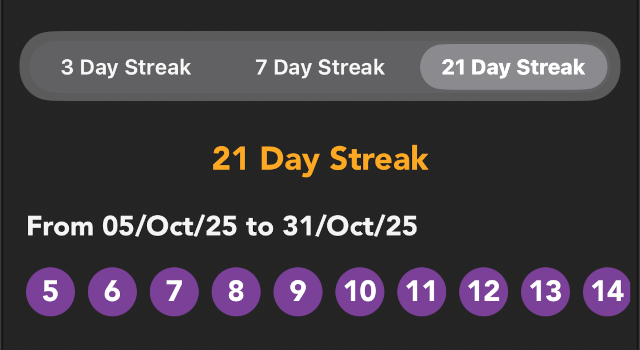
Forget counting beyond 21 days — the focus is on building patterns, not chasing perfection.
Your mindset shifts from:
“Don’t break the streak.”
to:
“Let’s complete this cycle.”
Final Takeaway
Streaks are not evil — they’re just poorly designed motivators. They turn habit formation into a fragile performance metric. One mistake wipes away your identity.
A healthier system:
- celebrates patterns
- supports natural breaks
- focuses on micro cycles
- builds internal identity
In HabitPath, your streak history lives in your calendar, forever — not a number that resets like a game score.
The question isn’t:
“How many days in a row?”
It’s:
“Can I design a life where habits happen naturally?”
Build patterns, not streaks.