
How to Choose the Right Habit Tracker App When You Have ADHD: 5 Crucial Features
15 Dec 25, 08:00
Every day, you wake up with a solid plan.
Today is the day you’ll finally get your morning routine in order.
Today you’ll exercise.
Today you’ll study, journal, drink water, or stop doom-scrolling.
You know that tracking your habits helps. So you download a new, slick habit tracker app. The onboarding is exciting. The interface looks polished. You promise yourself: This time will be different.
Then the cycle begins.
A few days in, the app starts to feel heavy. The streak calendar silently judges you. You miss one day maybe because you were overwhelmed, tired, or simply forgot and suddenly the entire system feels broken. The interface demands too much thinking. The reminders annoy you instead of helping you. Opening the app feels like emotional friction.
Eventually, you stop opening it at all.
If you have ADHD (Attention-Deficit/Hyperactivity Disorder), this experience is painfully common. Most habit tracker apps are built for neurotypical users—people who thrive on rigid streaks, linear progress, and simple binary checkboxes. For the ADHD brain, those same features often backfire.
They trigger resistance to rigidity, amplify guilt, and reinforce the exact cycle of consistency failure you’re trying to escape.
The Good News: It’s Not Your Fault, it’s the app
This is the most important thing to understand:
- You are not lazy
- You are not unmotivated
- You are not “bad at habits”
The real problem is a mismatch between how your brain works and how most habit trackers are designed.
Generic apps tend to worsen core ADHD challenges, including:
- Executive Dysfunction: Too many steps just to “log” a habit
- Time Blindness: Reminders that don’t interrupt attention at the right moment
- Perfectionism & All-or-Nothing Thinking: One missed day leading to shutdown
But there is a solution.
When you choose the right habit tracker for ADHD adults, the app becomes an external brain - a flexible, supportive system that works with you instead of against you.
In this guide, we break down the 5 crucial habit tracker features for executive dysfunction. If an app fails on even one of these, it will likely feed the cycle of guilt and inconsistency. If it succeeds, it can finally help you build habits that stick.
Feature #1: The Power of Forgiveness - Why Strict Streaks Are Toxic
Most habit trackers are obsessed with streaks.
At first, streaks feel motivating. But for ADHD brains, they often become emotional landmines.
Miss one day and suddenly:
- The streak resets to zero
- Visual progress disappears
- Your brain labels it as failure
This triggers classic ADHD all-or-nothing thinking:
“I already ruined it, so why bother continuing?”
Strict streak systems punish inconsistency instead of accommodating reality. ADHD progress is not linear. Energy fluctuates. Focus comes and goes. One missed day should never erase weeks of effort.
A truly ADHD-friendly habit tracker must support non-rigid tracking:
- Skipped days don’t reset everything
- Effort matters more than perfection
- “Maintenance days” are allowed
👉 HabitPath Integration
HabitPath avoids toxic streak pressure by focusing on continuity over time.
One bad day doesn’t erase your progress. Read more about how our habit tracker -
HabitPath uses the Daily Completion Calendar that
won't get your streak reset.
If an app shames you for missing a day, it’s not the best habit tracker for ADHD adults.
Feature #2: Flexibility Beyond "Done" i.e Tracking Countable Habits (The + System)
Most apps ask only one question:
“Did you do the habit today? Yes or No.”
For ADHD brains, this question is often the problem.
ADHD habit formation is rarely binary. Some days you have energy. Some days you have five minutes. Some days you do something—but not “enough” to justify checking the box.
This leads directly to the all-or-nothing trap.
A powerful ADHD habit tracker must support countable habits, such as:
- Pages read
- Minutes exercised
- Glasses of water
- Small cleanup actions
Why countable systems work so well:
- They validate partial progress
- They reduce perfectionism paralysis
- They turn effort into visible data
👉 HabitPath Integration
HabitPath’s + system lets you log what you actually did. One page still counts. Five minutes still matters.
Read more on our post: Why Countable Habits Work Better for ADHD
If you want an app to beat consistency failure ADHD, avoid binary-only tracking.
Feature #3: Interrupting Time Blindness - Flexible, Habit-Level Time Reminders
Time blindness is one of the most underestimated ADHD challenges.
You don’t skip habits because you don’t care.
You skip them because time quietly slips away.
Hours pass without registering. Evening suddenly becomes night. And by the time you remember the habit, the moment is already gone.
This is why reminders matter so much for ADHD - but also why generic reminders often fail.
A single rigid reminder like "8:00 PM – Journal" assumes:
- Your energy is predictable
- Your evenings look the same every day
- You’ll be mentally available at that exact moment
For ADHD brains, that’s rarely true.
What Actually Works Better for ADHD
While full context-aware reminders (based on location or app usage) are powerful, even before that, an ADHD-friendly habit tracker must at least offer flexible, habit-level time control.
Effective reminder systems for ADHD should be:
- Specific to each habit (not global)
- Flexible across the day
- Easy to adjust when your routine changes
- Non-judgmental in tone
Instead of one "perfect" reminder time, ADHD users often need:
- Multiple reminders for the same habit
- Different times on different days
- Preset options that reduce decision fatigue
This flexibility helps compensate for time blindness without demanding perfect planning.
👉 HabitPath Integration (Truthful & Accurate)
HabitPath approaches reminders with simplicity and flexibility, not rigidity.
For each habit, you can:
- Choose from preset reminder templates (morning, afternoon, evening, etc.)
- Add custom reminder times that fit your daily rhythm
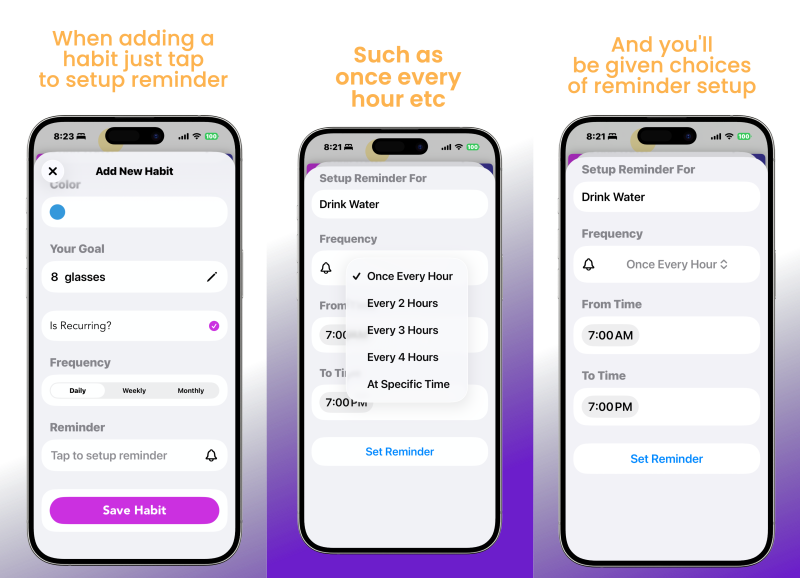
- Receive gentle, neutral notifications like
“Hey dear, it’s time to drink water” when the selected time is reached
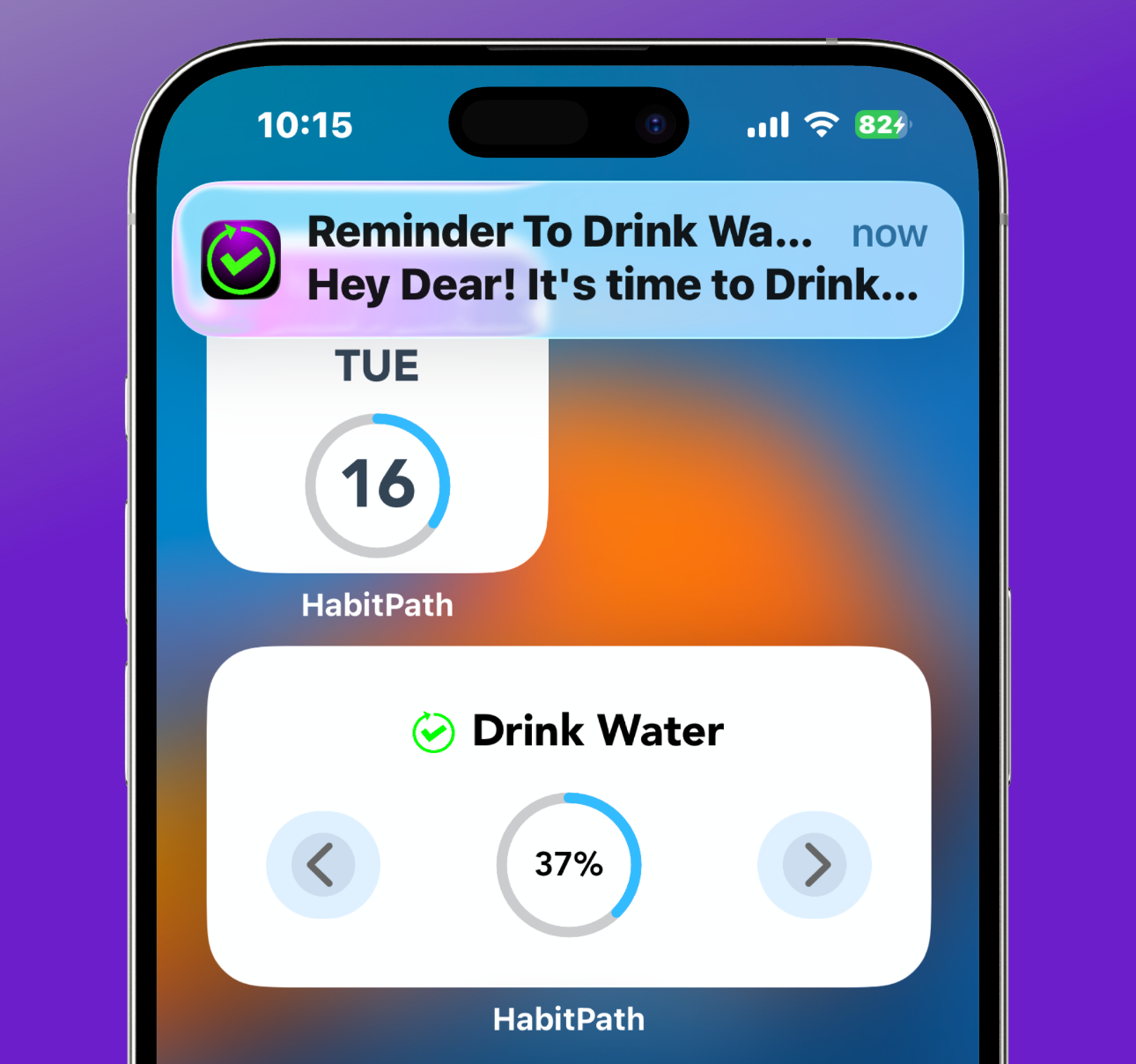
When the scheduled time arrives, a local notification fires reliably, helping pull the habit back into awareness - without pressure, streak threats, or guilt.
This may sound simple, but for ADHD brains, being able to choose and adjust reminder timing per habit is already a major upgrade over one-size-fits-all systems.
📌 Future-facing note (optional)
HabitPath is designed to evolve, and reminder flexibility is the foundation for more context-aware systems later — without overwhelming users today.
The Key Takeaway
If reminders are:
- Too rigid → you ignore them
- Too frequent → you mute them
- Too judgmental → you avoid the app
The goal isn’t perfect timing.
The goal is gentle interruption.
Even a simple, well-timed reminder — chosen by you, per habit — can be enough to break time blindness and bring the habit back into focus.
Feature #4: The Dopamine Hit - Visual, Sensory, and Novel Feedback
ADHD brains are dopamine-driven. This is biology, not a character flaw.
If an app is boring or visually flat, your brain will abandon it—no matter how useful it is.
The best habit tracker for ADHD adults provides:
- Immediate visual feedback
- Color and motion
- Satisfying progress indicators
This isn’t childish gamification. It’s neuro-aligned design.
👉 HabitPath Integration
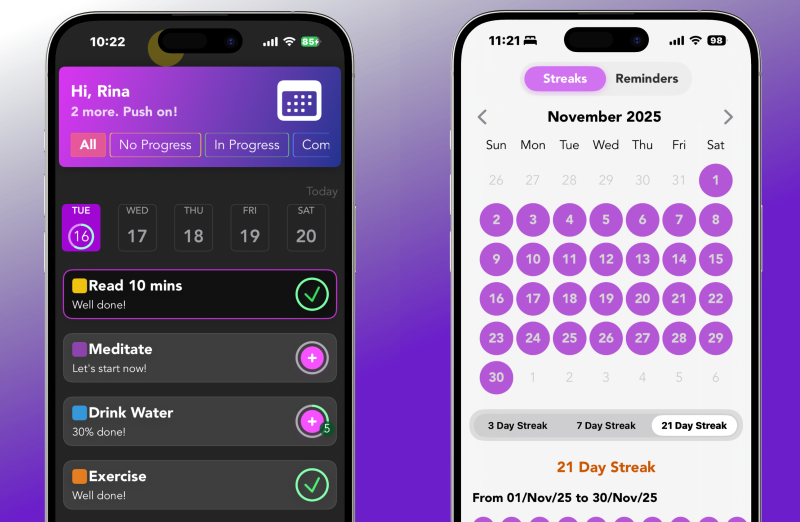
HabitPath uses clean visuals, intentional color, and smooth interactions so logging a habit feels rewarding instead of draining.
If an app feels dull, your brain will disengage. That’s not discipline - it’s neuroscience.
Feature #5: Less Clicks, More Doing — Minimizing Cognitive Load
Executive dysfunction turns small tasks into big obstacles.
If tracking requires:
- Multiple screens
- Too many decisions
- Excessive tapping
…it will eventually fail.
An ADHD-friendly habit tracker must minimize cognitive load:
- Open app
- One or two taps
- Done
👉 HabitPath Integration
HabitPath is designed for speed and clarity. The tracking flow is frictionless so your energy goes into doing the
habit - not managing the app.
Conclusion: Don’t Judge Your Brain — Choose the Right Tool
Let’s recap the 5 crucial features your habit tracker must have:
- Non-rigid, forgiving tracking
- Flexible, countable habits
- Context-aware reminders
- Visual and sensory feedback
- Minimal cognitive load
Consistency isn’t about willpower. It’s about alignment.
Stop forcing yourself into tools that work against your brain. When the system matches how you think, habits stop feeling like punishment—and start feeling possible.
Ready to Use an App That Actually Supports Your ADHD Brain?
👉 Download HabitPath today and start building consistency with low effort.
You don’t need more discipline.
You need the right tool.